1. Objective
Go is a game of surrounding. Place stones to build connected groups, surround empty territory, and capture opposing groups while keeping your own stones alive. The player with the higher final score wins.
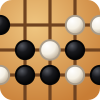
Detailed rules and gameplay guidance for Go.
Go is a game of surrounding. Place stones to build connected groups, surround empty territory, and capture opposing groups while keeping your own stones alive. The player with the higher final score wins.
Choose a 19x19, 13x13, or 9x9 board. Black plays first, and the seats are assigned to black and white for the game. Stones are placed on intersections rather than inside squares.
A stone has a liberty when an adjacent intersection is empty. Orthogonally connected stones of the same colour form one group and share liberties. A group with no liberties is captured and removed.
A move must use an empty intersection. It may capture opposing groups, but it may not leave the played stone or its connected group without liberties. An immediate move that recreates the previous position is forbidden by the ko rule.
You may pass instead of placing a stone. Two consecutive passes normally begin scoring review. If the board is still empty, the game finishes immediately and the empty board is scored without a review.
When review begins, the game automatically suggests groups that appear dead. The reviewing player can click a group to mark or unmark it, then confirms the proposal. The other player reviews the same position and confirms their own proposal. The board does not change while the players review it.
Matching dead-stone proposals finish the game and determine the final score. If the proposals differ, the review is cancelled, the dead-stone marks are cleared, and play resumes so the players can settle the position on the board.
Japanese territory scoring counts surrounded territory and captures. Chinese area scoring counts surrounded territory and living stones. White receives the selected komi, which compensates for Black playing first.
The table sets a separate review timer for each player. Running out of review time does not forfeit the game; the player’s current review proposal is submitted automatically and the other player gets their review turn. Any pending board selection is submitted when the client reaches the review deadline.